



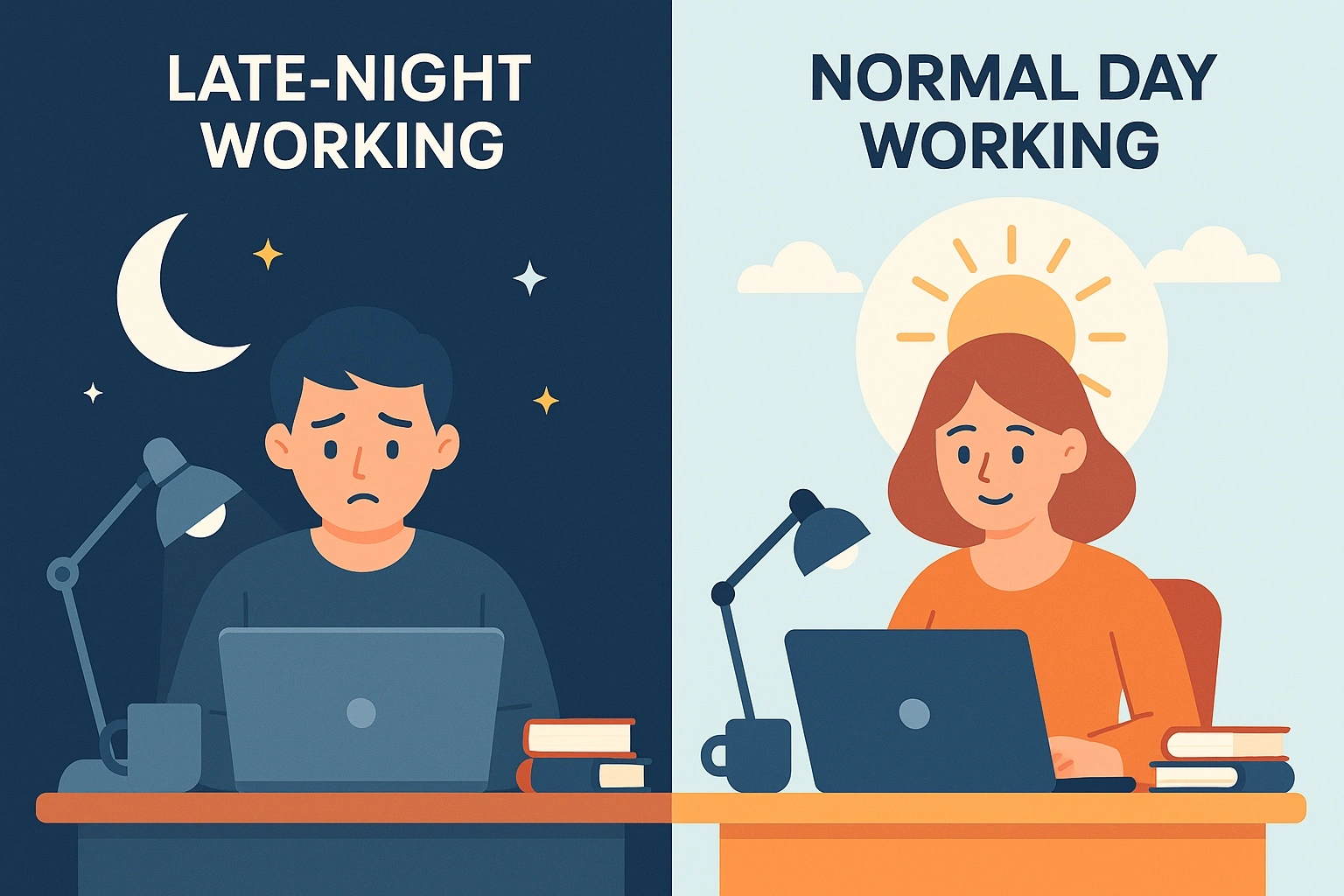
🌙 Late-Night Working vs. 🌞 Normal Day Working
In today’s hyper-connected work culture, burning the midnight oil has almost become a badge of honor. However, the human body operates on a finely tuned internal clock known as the circadian rhythm. Disrupting this natural cycle by working late nights can have serious repercussions on both physical and mental health.
Let’s dive into how working at night stacks up against regular day shifts from a medical and wellness perspective.
🕰️ Understanding Circadian Rhythm
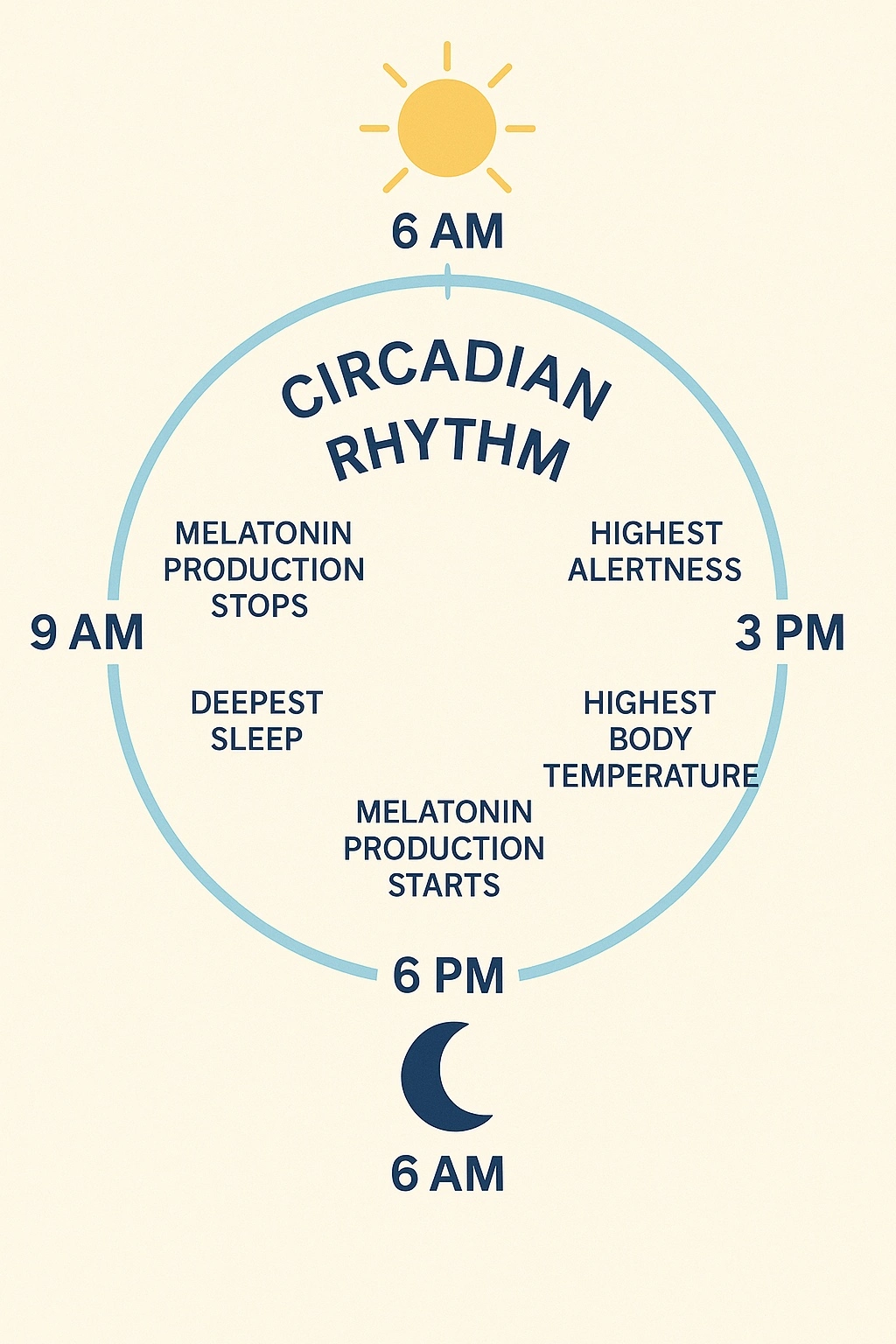
Our circadian rhythm is a 24-hour internal clock that regulates the sleep-wake cycle, hormone release, body temperature, and other vital bodily functions. It is naturally aligned with the light-dark cycle of the day.
Normal Day Workers benefit from this alignment:
- Alertness peaks during daylight hours.
- Melatonin (sleep hormone) production starts around 9 PM, preparing the body for rest.
Late-Night Workers, however, override these signals. This creates a misalignment between their internal clock and external environment, leading to what’s called “circadian misalignment.”
🩺 Medical Impacts of Late-Night Working
Let’s compare the long-term effects of night shifts vs. day shifts:
| Health Domain | Day Shift Workers | Late-Night Workers |
|---|---|---|
| Sleep Quality | Deep, restorative sleep | Poor sleep; increased risk of insomnia and sleep apnea |
| Mental Health | Better mood stability | Higher rates of anxiety, depression, and burnout |
| Metabolism | Stable glucose regulation | Increased risk of Type 2 diabetes and obesity |
| Heart Health | Normal cardiovascular function | Elevated blood pressure, higher risk of heart disease |
| Hormonal Balance | Healthy melatonin, cortisol, and insulin levels | Hormonal disruptions causing fatigue, weight gain, mood swings |
| Cancer Risk | Normal cell cycle regulation | WHO classified shift work as a possible carcinogen |
🧠 Cognitive Performance and Alertness
Late-night work often leads to “sleep debt” — a cumulative effect of not getting enough sleep. This results in:
- Decreased concentration and memory (prefrontal cortex dysfunction)
- Slower reaction time (dangerous for critical jobs)
- Higher chances of human error
📊 Chart: Cognitive Performance by Time of Day
plaintext
Cognitive Efficiency (%)
(Time of Day)
Notice how cognitive performance declines significantly during late-night hours.
🍔 Metabolism and Weight Gain
Working at night alters eating habits. People tend to:
- Snack more on high-sugar, high-fat foods
- Eat at biologically inappropriate times, causing postprandial glucose spikes
This increases the risk of:
- Obesity
- Insulin resistance
- Metabolic syndrome
🫀 Heart Disease and Blood Pressure
Studies have shown that night shift workers have:
- Higher levels of C-reactive protein (marker of inflammation)
- Disrupted lipid profiles (bad cholesterol up, good cholesterol down)
- Elevated nighttime blood pressure due to poor parasympathetic activity
This adds up to an increased risk of hypertension, stroke, and coronary artery disease.
🧬 Disruption in Hormones and Immunity
Late-night work affects:
- Melatonin: suppressed due to exposure to artificial light
- Cortisol: the stress hormone remains elevated
- Leptin & Ghrelin: hormones regulating hunger and satiety go off balance
As a result, immunity is weakened, making one more prone to:
- Infections
- Inflammatory diseases
- Even certain cancers
👩⚕️ Solutions for Organizations
To protect employee health while ensuring productivity:
- Encourage day shift scheduling wherever possible.
- Rotate shifts forward (morning → evening → night) instead of backward.
- Provide healthy food options during night shifts.
- Offer regular health check-ups for shift workers.
- Educate employees on sleep hygiene and stress management techniques.
🌅 In Conclusion
Late-night work is not just a lifestyle choice — it’s a health risk. While business demands may sometimes require odd hours, it’s crucial for both employers and employees to understand the long-term trade-offs.
Aligning work hours with our natural biological rhythm is not just about better sleep — it’s about better health, sharper focus, and longer life.
If your organization is looking to enhance employee well-being, consider scheduling a corporate wellness session to educate your workforce on smarter, healthier work habits.
👉 Contact us for customized corporate health solutions and shift worker wellness plans.